


If you’re trying to maintain a healthier diet, adding more fruits and vegetables to your shopping list is the best place to start. But it’s hard to enjoy the benefits of fresh fruits and veggies when you’re tossing more than you’re eating each week.
On average, Americans throw away almost a quarter of the produce they bring home. Using this guide to how to store fresh produce correctly, we’ll help you cut down on your food waste and crush those nutrition goals.
Why Does Produce Spoil So Fast?
Before we get into how to store your fresh produce items, it’s important to understand why they spoil so fast. There are a few variables that can impact freshness:
- Ethylene
- Temperature
- Humidity
- Airflow
1. Ethylene Gas
Ethylene is a natural gas that some fruits and vegetables release that causes them to ripen. Each type of produce item falls within three categories: (1) ethylene producers, (2) ethylene sensitive, and (3) not ethylene sensitive.
When the ethylene producers are stored with ethylene-sensitive fruits or veggies, the gas can cause the sensitive produce to ripen faster which causes your food to spoil faster than you can eat it.
Ethylene gas isn’t all bad for freshness, though! There are times when you can use it to work for you! When you need to quickly ripen a banana, avocado, peach, or other gas-producing fruit, place it in a paper bag and allow the trapped gases to speed up the ripening process.
2. Temperature
To learn how to store fresh produce, you must learn what temperatures make your fruits and veggies happy. Some items do best in the fridge and others on the countertop. Understanding which fruits and vegetables do best in which conditions can help prevent your produce from spoiling too fast.
Most produce stays at peak freshness in the refrigerator at temperatures between 32-40℉. Others require slightly higher temperatures, between 41-50 ℉. The fruits and vegetables that don’t fall into either of these categories thrive at room temperature, anywhere between 60-70 ℉.
Another caveat to consider about temperature is that any produce that has been cut, chopped, or peeled should be stored in your refrigerator afterward to maintain freshness.
3. Humidity
Humidity is another important consideration when it comes to storing your fresh produce. Like temperature, some fruits and veggies require high humidity to maintain their freshness and others need low humidity.
Generally speaking, leafy greens and fresh herbs require higher humidity to prevent them from wilting and drying out. Most fruits, however, stay fresh longer in lower humidities to avoid a buildup of excess moisture, which ultimately leads to mold and rot.
This is where your refrigerator’s produce or crisper drawers can come in handy. Most fridges are designed with 2 — one with less airflow to maintain a high humidity within the drawer and the other with more airflow to maintain a low humidity within the drawer.
Fruits and vegetables that give off high amounts of ethylene and are sensitive to humidity should be stored in one drawer, while the ethylene-sensitive vegetables that thrive in high-humidity environments should be kept in the other.
Often, these drawers are designed with fruit and vegetable labels to help us consumers know how to store our fresh produce. If not, just be sure to keep your items high- and low-humidity items separate.
4. Airflow
The final factor that’s important to produce storage is airflow. And now that we’ve covered ethylene and humidity, airflow should be slightly intuitive.
High ethylene producers and produce that needs low humidity should be kept in perforated bags or non-air-tight containers to allow air circulation and prevent the items from overripening.
Ethylene-sensitive vegetables or those that require high humidity should be kept in airtight containers or bags to maintain high moisture levels.
Where to Store Fresh Produce
Now that you understand the basics, let’s break down how to store fresh produce in the fridge and on the countertop.
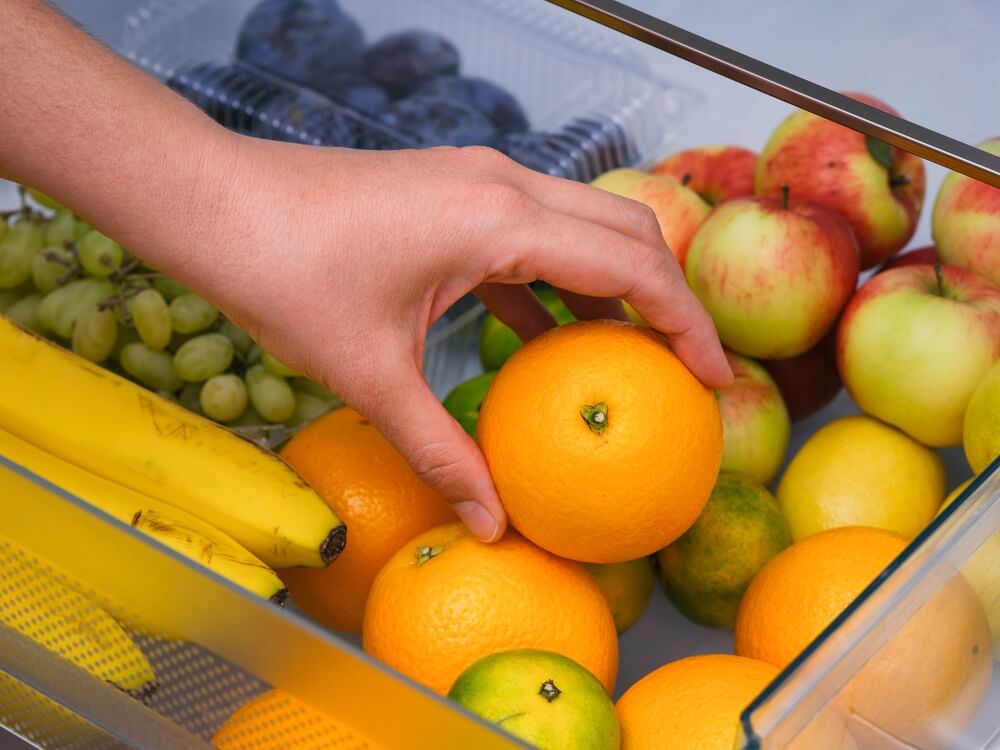
Fruits That Should Be Stored in The Fridge
These fruits stay fresh longer when kept in the fridge:
A helpful tip: store your berries and grapes with a paper towel to help soak up any excess moisture and keep them fresh for longer. After any of these items are cut or chopped, move them into an airtight container.
Fruits That Should be Stored on The Countertop
These fruits should be stored on the countertop until they are ripe:
After they reach your desired ripeness, you can extend the shelf life of these fruits by a few days or even weeks by moving them to the fridge.
After they’re cut or peeled, your fruits should be kept in airtight storage to keep them fresh.
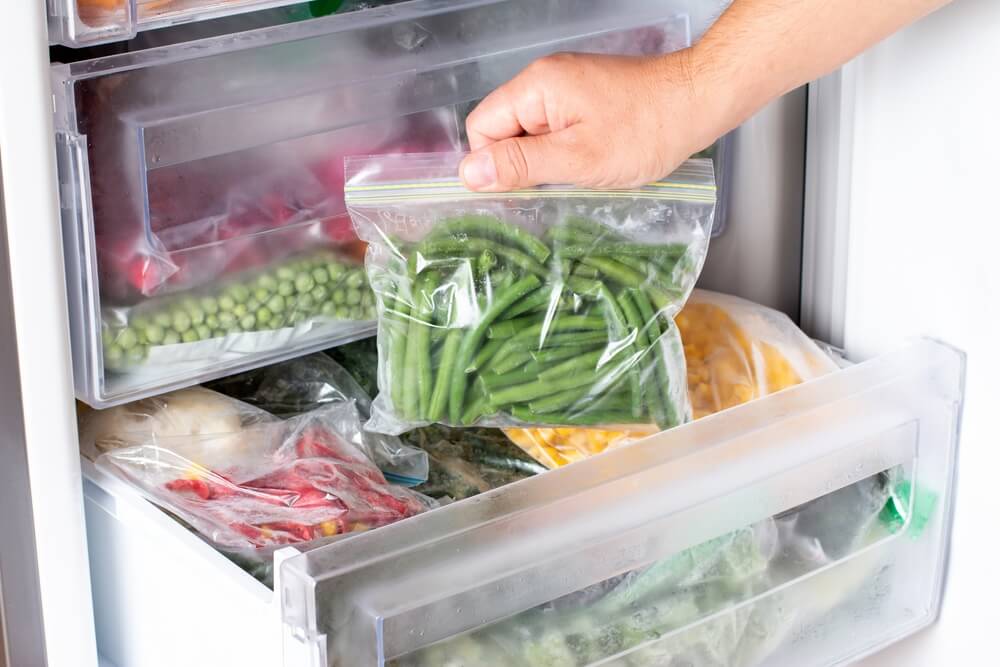
Vegetables That Should Be Stored in The Fridge
These vegetables do best when stored in the fridge. Pay close attention to how they should be stored to maximize freshness:
The storage instructions are based on whole, uncut vegetables. After they are cut, chopped, or peeled, these veggies should be refrigerated in airtight containers to stay fresh for longer.
Vegetables That Should be Stored on The Countertop
These vegetables should be stored on the counter and only refrigerated in an airtight container after they are cut or peeled:
Bonus tip: keep onions and garlic away from your potatoes to keep them from sprouting.
Want to extend the shelf life of your produce even further? Check out our quick pickling and Amish canning methods blogs to learn more.
Produce Storage Tips: At a Glance
If you’re in a time crunch, these general storage tips should help you learn how to store your fresh produce to keep it fresh the longest.
- Keep ethylene-producers away from the ethylene sensitive. This applies to produce that is stored on the countertop and fridge.
- Wash your produce before you eat it, not before you store it. Washing it first can speed up the decay process of those fruits and veggies that are sensitive to moisture.
- Exception: Leafy greens can be washed first, but make sure they’re thoroughly dried before returning to the fridge in an airtight container.
- Don’t overcrowd your produce drawers. Packing items in too tightly can cause them to rot faster.
- Place your countertop fruits in the fridge after they are ripe. This simple trick can slow the ripening process, keeping them fresh for a few extra days.
- Always store cut, peeled, or chopped produce in airtight containers in the fridge. This should keep them from spoiling until you’re ready to use them.
.jpg)